
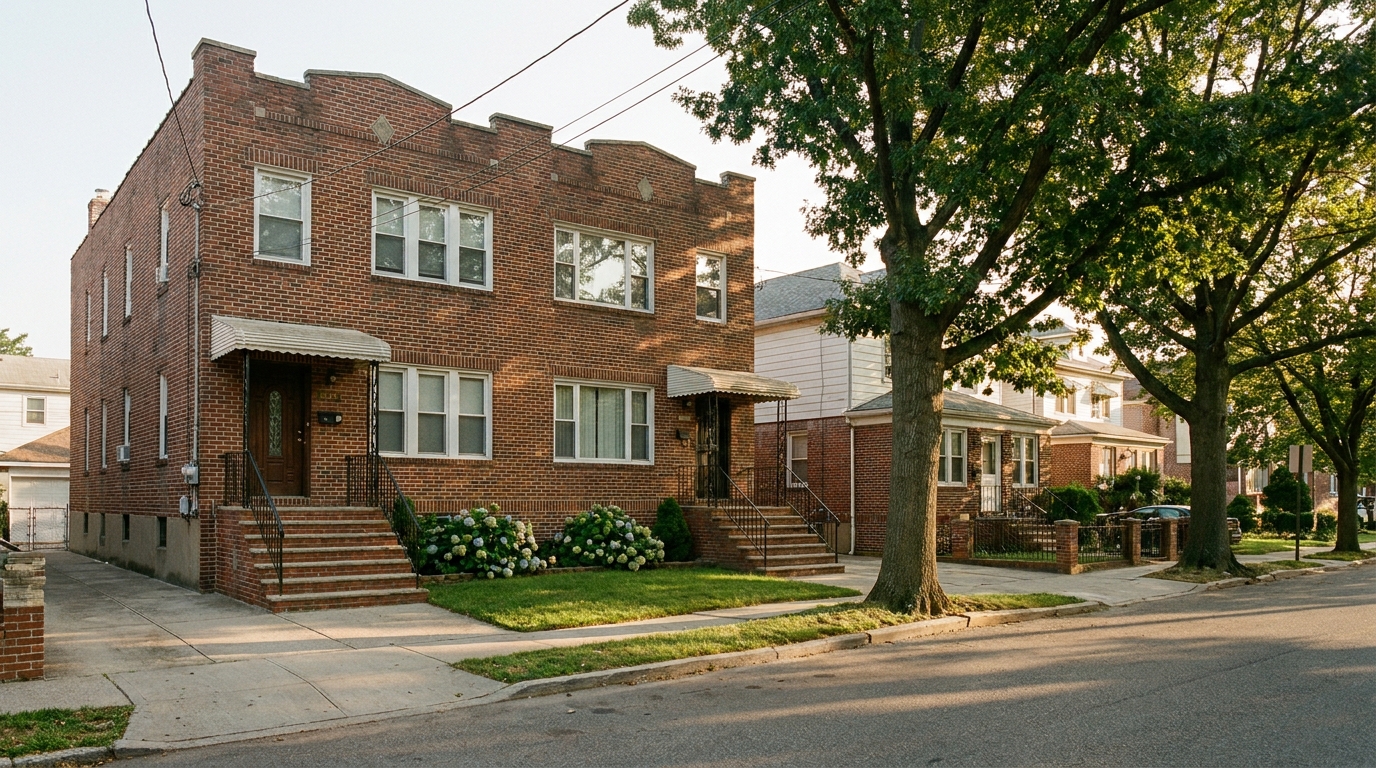
We closed an Avenue L 2-family in March at $1.18M after another agent had already told the owner it was worth $1.05M as-is. Both leases were expiring within the year and both were running slightly under market, which made the income approach interesting once we ran the numbers properly. The cap-rate math and the comps both pointed higher than the original valuation, so we listed at $1.19M and it went in 27 days. The buyer was an owner-occupier from East Midwood who wanted to live downstairs and rent the top floor, which is the most common Midwood multi-family playbook in 2026.
How multi-family pricing actually works here
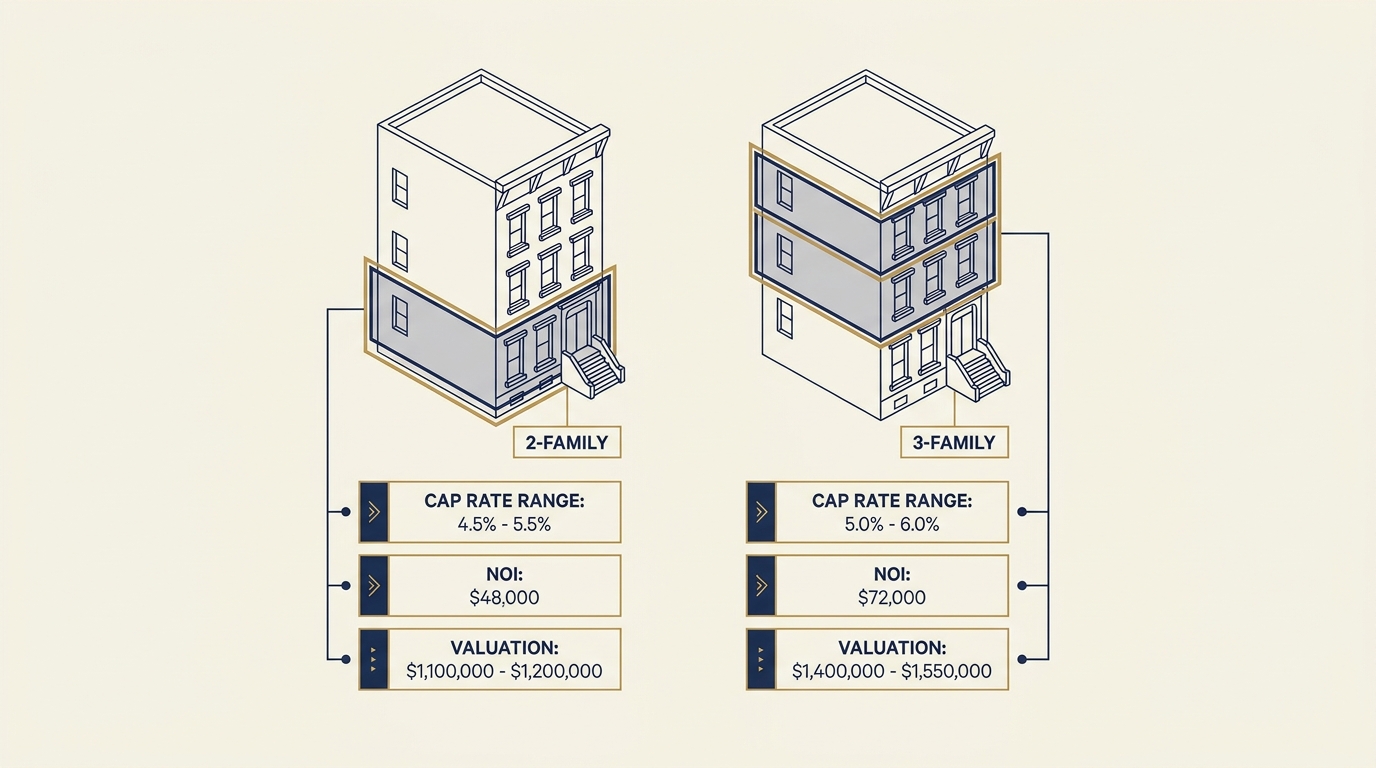
Pricing a single-family in Midwood is the straightforward case, since you pull comparable closed sales inside a tight radius and the answer is usually clear within a few thousand dollars. Multi-family runs through different math because the buyer is partly paying for the income stream, not just the building itself. So while we still pull comps on a per-square-foot or per-unit basis, we layer the income approach on top of them: net operating income divided by a market cap rate, which for southern Brooklyn 2-family stock has been running roughly 4.5 to 5.5 percent through 2026. Older buildings with deferred maintenance bring replacement value into the conversation as well, especially when the boiler is on its last winter and the buyer is going to need to budget for it.
To make this concrete, a Midwood 2-family generating $72K in net rental income against a 5 percent market cap rate lands the income approach at $1.44M. We sanity-check that number against retail comps and almost always go with whichever is lower, unless the building has something genuinely uncommon going for it. For an owner-occupier-style 2-family the retail comp tends to come in lower, while a pure investment building with strong cash flow can land higher on the income approach, which is where the negotiation actually starts. Whatever you do, don’t pick one number and pretend the other doesn’t exist, since most serious buyers run both sides of the math themselves.
Tenant-occupied versus vacant
This is the biggest single pricing decision a Midwood multi-family seller faces. A vacant 2-family generally sells faster and for more per square foot than a tenant-occupied one, since vacancy opens up the owner-occupier buyer pool. Investors will buy either type, although they discount tenant-occupied stock when leases are below market or when rent stabilization complicates future repositioning.
For tenants on month-to-month or short leases at market rent the discount versus vacant is usually small, somewhere in the three-to-six-percent range. For tenants paying materially below market on long leases the discount can run 10 to 15 percent. If any unit is rent-stabilized you should get a rent-stabilization specialist involved before listing because the regulatory math controls the price, and most agents won’t know which questions to ask in the first place.
Who’s writing offers on Midwood multi-family right now
Owner-occupier investors are the strongest single buyer pool, often a family wanting to live in one unit and rent the others. Multi-generational living is common in this community and a 2-family is the natural shape for it, which keeps demand consistent year over year. Pure investors are the next bucket, mostly Brooklyn-focused groups buying for cash flow who model on cap rate and stress-test against rate scenarios. You need clean numbers to even get them to the table.
Developer or repositioning buyers exist but they’re less active in Midwood than they are in Crown Heights or East Flatbush. You’ll see one or two on older buildings with conversion potential, although they don’t drive the median.
What you need ready before you list
Two years of operating statements covering rent collected, vacancy, repairs, taxes, water and sewer, insurance, fuel and utilities. An investor won’t make an offer without these, and a sloppy version costs you money in the negotiation phase. Beyond the operating statements you’ll need the current rent roll with lease end dates and rent-stabilization status per unit and security deposit amounts, plus the Certificate of Occupancy that matches the actual unit count.
The C of O sounds basic and trips up Midwood deals every quarter when the building is operating as a 3-family but the C of O reads 2-family. The most recent property tax bill matters too, along with any pending exemptions and the age of the boiler and roof and major systems with whatever service records you have on hand.
Don’t wait to gather any of this until the buyer asks, because pre-loaded diligence makes buildings sell faster.
1031 exchange piece
If you’re selling investment property and rolling proceeds into another investment property to defer capital gains, you’ve got 45 days to identify replacement and 180 days to close. Plan the exchange before listing rather than after, since the timing is unforgiving once the closing happens. We cover the mechanics in our 1031 exchange guide for Brooklyn multi-family sellers, including the LLC and qualified-intermediary pieces that catch first-timers off-guard.
How we approach multi-family listings
Multi-family pricing should never be guessed at. Karen’s pricing approach starts with comparable closed sales inside a four-block radius, layers an income-approach valuation on top, and reconciles the two before we settle on a list price. We maintain an active investor-buyer network in southern Brooklyn that often closes within the first three weeks of listing on properly priced 2-family and 3-family stock. Multilingual outreach across English, Hebrew, Spanish, French, and Farsi widens the pool further. The Avenue L close I mentioned at the top moved fast because the right buyer was already on our list when we went live.
Brooklyn landlord exit strategy guide » · Free Midwood multi-family valuation · Meet the team
About The Behfar Team
Karen Behfar (lead agent, Master’s in Psychology) and Aharon Behfar lead The Behfar Team from 1524 East 23rd Street in Midwood, Brooklyn. The team focuses on sellers across Midwood and the surrounding southern Brooklyn neighborhoods, and works with clients in five languages. Recent listings have been averaging roughly 38 days on market when priced from comparable closed sales. Meet the team · Free home valuation · (347) 988-2526.
This guide is informational and reflects The Behfar Team’s observations as of May 2026. Real estate decisions should be made with a licensed New York State real estate professional and, where relevant, a tax or legal advisor. Equal Housing Opportunity.
2026 update: how the rent freeze is affecting small-building values.